Yes. A normal ear exam can prompt clinicians to consider pain referred from the jaw. It does not establish a TMJ diagnosis; migraine and other conditions remain possible.[1]
The useful next question is whether your history and examination provide positive evidence that the jaw is contributing. That distinction matters before choosing treatment.
Why jaw pain can feel like ear pain
The temporomandibular joint, or TMJ, sits just in front of the ear. Temporomandibular disorders, usually shortened to TMD, include conditions affecting that joint and the muscles used for chewing.[2]
Pain can be referred: you feel it somewhere other than its source. Sensory pathways serving the ear overlap with those from other parts of the head and neck, including the jaw, teeth, and throat.[1]
The location of the discomfort tells us where you feel it. The examination helps determine where it begins.
Clues that make a jaw contribution more plausible
A clinician will ask whether chewing, opening wide, or clenching changes your familiar pain. They will also check whether controlled jaw movements or pressure over specific chewing muscles or the joint reproduce the pain you came in to discuss. These are important parts of assessing pain-related TMD.[3]
- Does chewing or yawning bring on the same ache?
- Does the ear discomfort occur alongside jaw or temple pain?
- Can the examination reproduce your usual symptom?
These questions help build a consistent explanation. They are not a home diagnostic test. A tender spot by itself is insufficient, and the findings must fit the history while other explanations remain under consideration.[3]
A painless jaw click alone is common and usually does not require treatment. It should not automatically be blamed for an earache.[2]
What about a plugged or full ear?
Ear fullness deserves separate attention. Feeling pressure or blockage is different from pain, and neither tells you whether hearing is normal.
Research suggests that TMD may contribute to fullness in some patients. A 2017 retrospective study followed patients whose main complaint was ear fullness and whose eardrums and standard middle-ear pressure tests were normal. Many reported improvement after TMD-directed care.[4]
However, there was no untreated control group, and patients received different treatments. The study cannot establish how much improvement came from treatment rather than natural recovery, or predict what will work for an individual. It also does not justify adopting every treatment used in that study.[4]
A normal hearing test does not, by itself, prove that fullness comes from the jaw. The research supports considering a jaw contribution within a broader evaluation.[4]
What a useful evaluation should clarify
Bring previous ear-exam findings and hearing-test results. Describe when the symptom began, which side is involved, and what changes it. Mention hearing changes, ringing, drainage, or throat symptoms, which can change the direction of the assessment.[1]
For the jaw portion, the clinician should review the pain history, assess movement, and examine the chewing muscles and joints. A key question is whether the examination reproduces your familiar pain, rather than simply finding an area that is sensitive when pressed.[3]
Ask: What findings support this explanation? What else still needs checking? What result should we look for at follow-up?
Treatment should follow the findings
When a jaw disorder is supported by the evaluation, initial care often involves reducing clenching and gum chewing, temporarily choosing easier-to-chew foods, and using guided self-management or physical therapy when appropriate.[2]
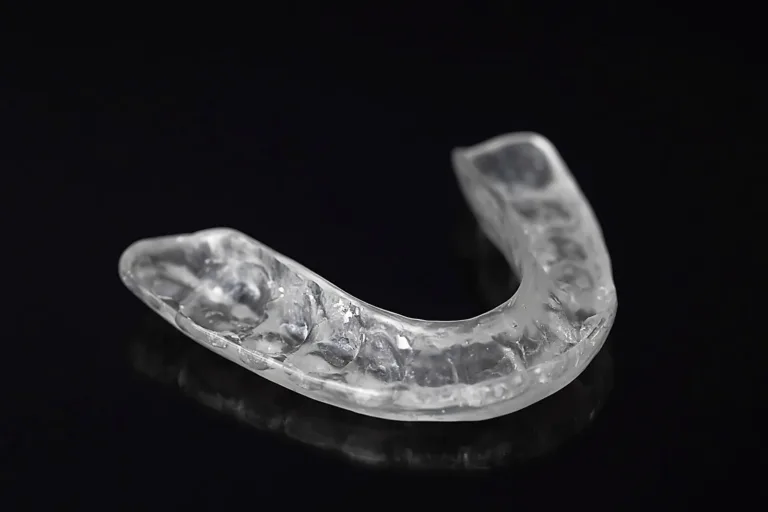
A night guard is not an automatic answer to ear symptoms. Evidence that oral appliances relieve TMD pain is limited, and an appliance should not be designed to permanently change the bite. Irreversible tooth or bite changes should not be the starting point for a suspected TMD.[2]
Agree on a reassessment plan. Persistent ear symptoms deserve another look, especially if the working explanation is not supported by the course of symptoms.
When medical attention comes first
A sudden drop in hearing is a medical emergency. It may feel like a newly blocked or muffled ear and can occur with ringing or dizziness. Seek medical attention immediately rather than waiting for a dental visit or assuming it is your jaw. A previously normal hearing test does not explain a new change.[5]
Seek prompt medical assessment for ear pain with drainage, fever, or redness or swelling around the ear. Persistent unexplained pain, especially on one side, also warrants medical review, particularly with difficulty swallowing, hoarseness, or a neck lump. An ENT examination may be needed.[1]
The next reasonable step
If your ear has been checked and symptoms continue, a focused jaw and facial-pain evaluation may help determine whether the muscles or joint are contributing. You do not need to arrive with a diagnosis.
Learn about TMJ and orofacial pain care at Highlands Dentistry in Issaquah, or request an evaluation with Ray Besharati, DDS, DMD, MS.
Related reading: Why Does My Jaw Hurt on One Side?
This article provides general education and does not replace an individual medical or dental evaluation. The evaluation request form is for scheduling, not urgent care; for sudden hearing loss or other urgent symptoms, use the guidance above.
References
- Formeister EJ. Otalgia. Merck Manual Professional Edition. Reviewed January 2025. Read source
- National Institute of Dental and Craniofacial Research. TMD (Temporomandibular Disorders). Accessed October 19, 2026. Read source
- Schiffman E, Ohrbach R, Truelove E, et al. Diagnostic Criteria for Temporomandibular Disorders (DC/TMD) for Clinical and Research Applications. Journal of Oral & Facial Pain and Headache. 2014;28(1):6–27. doi:10.11607/jop.1151. Read source
- Peng Y. Temporomandibular Joint Disorders as a Cause of Aural Fullness. Clinical and Experimental Otorhinolaryngology. 2017;10(3):236–240. doi:10.21053/ceo.2016.01039. Retrospective series without an untreated control group. Read source
- National Institute on Deafness and Other Communication Disorders. Sudden Deafness. Updated September 14, 2018. Accessed October 19, 2026. Read source