By Ray Besharati, DDS, DMD, MS
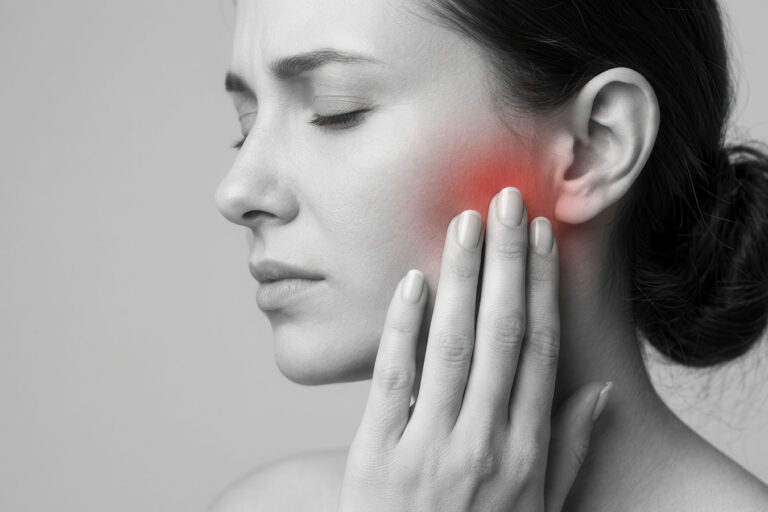
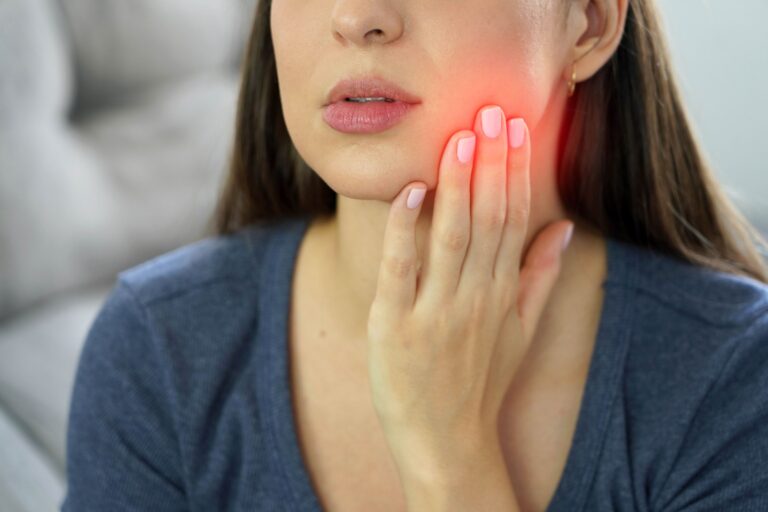
You wake up with a sore jaw. Maybe it hurts to chew, or you notice an ache near your ear. A few days later, it feels a little better—but you’re unsure whether to leave it alone or make an appointment.
The answer is: some jaw pain does improve on its own, but the right next step depends on what is happening and whether it is getting better.
Many temporomandibular disorders—or TMDs, a group of conditions involving the jaw joints and chewing muscles—improve without invasive treatment. Others persist, return, or interfere with daily life and deserve a closer look. And not all pain near the jaw comes from a jaw disorder. NIDCR
The goal is not to react to every sensation. It is to notice the pattern and understand when the pattern is changing.
First, what do we mean by “TMJ pain”?
Your temporomandibular joints, or TMJs, are the joints in front of your ears that help your lower jaw move. Muscles around the jaw, temples, and face help you chew, speak, and yawn.
“TMJ pain” is a common way to describe discomfort in this area, but it is not a specific diagnosis. Pain may involve the joint, the muscles, or another structure altogether. Dental problems, certain headaches, and ear or nerve conditions can also cause pain that feels as though it is coming from the jaw.
That distinction matters because the best treatment depends on what is causing the symptoms—not simply where you feel them.
Can jaw pain improve without treatment?
Yes. For many people, TMD symptoms settle without invasive treatment. The National Institute of Dental and Craniofacial Research notes that many jaw joint and muscle problems are temporary and do not become worse. Simple measures may be all that is needed. NIDCR
But improvement is not guaranteed, and no one can accurately predict your recovery based on a single symptom.
Rather than focusing only on whether you still feel something, look at the direction of change:
- Is the discomfort becoming less frequent or less intense?
- Can you chew, speak, and open your mouth more comfortably?
- Are you returning to normal activities?
- Are the symptoms staying the same, getting worse, or coming back repeatedly?
A jaw that is gradually becoming more comfortable is a different situation from one that is increasingly painful or harder to open.
When might it be reasonable to monitor it?
If your discomfort is mild, your jaw moves normally, you can eat and drink, and you are already noticing improvement, it may be reasonable to give it some time while avoiding activities that aggravate it.
For example, you may notice soreness after a long dental appointment or a period of unusually heavy chewing. If it settles and normal function returns, you may not need further treatment.
Monitoring should be active, not indefinite. If you are uncertain about the cause, the symptoms are not improving, or the pain concerns you, an evaluation is reasonable. You do not have to wait until pain becomes severe to ask for help.
What can I do while my jaw is sore?
Simple, gentle measures may make you more comfortable while symptoms settle:
- Choose softer foods for a short time. Reduce chewing demands, then return to your usual foods as comfort allows.
- Avoid habits that make the soreness worse, such as chewing gum or biting your nails.
- Notice daytime clenching. When you are not eating or swallowing, let your teeth rest apart and your jaw relax.
- Try gentle warmth or a cold pack, wrapped in a towel, if either feels comfortable.
- Avoid forcing your jaw open or repeatedly testing a painful movement.
If you are considering an over-the-counter pain medicine, ask your physician or pharmacist whether it is appropriate for you, especially if you take other medications or have medical conditions.
These steps can ease symptoms, but they do not establish a diagnosis. If pain is worsening or not improving, the answer is not simply to keep doing the same things longer. NIDCR
When should I schedule an evaluation?
Consider arranging an evaluation if:
- Your pain is not improving, keeps returning, or is getting worse.
- Chewing, speaking, sleeping, or opening your mouth is becoming uncomfortable.
- Your jaw feels stiff, catches, or does not move as it normally does.
- Clicking is accompanied by pain or a change in movement.
- You have been using a night guard or another appliance and symptoms are continuing or worsening.
- You are unsure whether the discomfort is coming from a tooth, the jaw muscles, the joint, or somewhere else.
An evaluation does not automatically mean you need an appliance or a procedure. Sometimes the most useful result is understanding what can be monitored, what may help, and what would warrant a follow-up.
What if my jaw clicks but doesn’t hurt?
A click by itself does not necessarily mean something is damaged or needs to be corrected.
Painless jaw sounds are common, and the National Institute of Dental and Craniofacial Research states that sounds without pain generally do not need treatment. Pain, new limitation, catching, or locking changes the picture and makes a closer assessment more useful. NIDCR
The sound is one piece of information. How your jaw feels and functions matters more than the noise alone.
When should I seek prompt or emergency care?
Some symptoms should not wait for a routine online appointment request.
Seek prompt professional care if your jaw becomes stuck open and you cannot close it, if you have a new significant limitation in opening, or if pain or restricted movement prevents you from eating or drinking. A significant jaw injury also needs prompt assessment. Do not try to force a locked jaw into position.
Seek emergency medical care for trouble breathing or swallowing, major facial or neck swelling, or serious facial trauma. Sudden neurological symptoms—such as facial drooping, weakness, or difficulty speaking—also require emergency services.
If your jaw is locked and you cannot reach an appropriate clinician promptly, seek emergency evaluation. For more detail, read Jaw Locked? What to Do If Your Mouth Won’t Open or Close. raybesharati.com
What happens during a TMJ evaluation?
I start by listening to your experience: when the discomfort began, where you feel it, what changes it, and how it affects your daily life.
Depending on your symptoms, an examination may include looking at how your jaw moves, checking the jaw joints and chewing muscles, and considering whether a dental or other medical condition could be contributing. Imaging is considered when the history and examination suggest it may help answer a specific question; it is not automatically necessary for every patient.
The aim is to arrive at an explanation that fits your findings and to discuss a practical next step. Sometimes that means monitoring and self-care. Other times, it may mean a more structured treatment plan or coordination with another clinician.
Does persistent jaw pain always need a night guard?
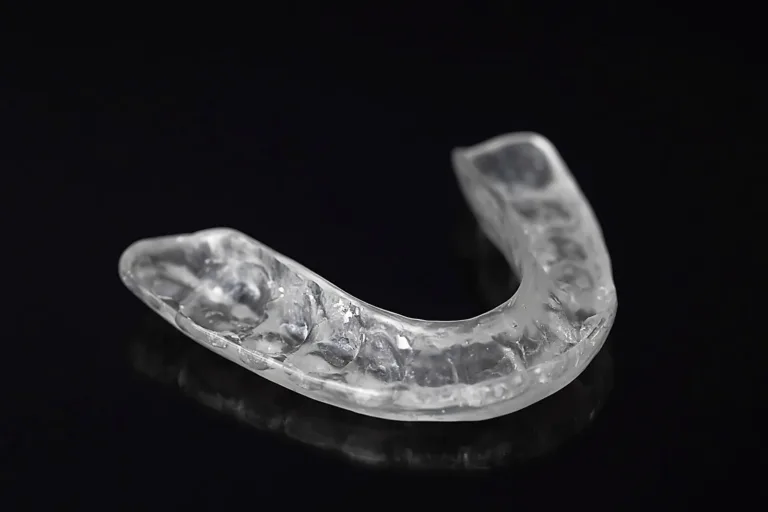
No. A night guard may have a role for some people, but it is not the answer to every type of jaw pain. The reason for recommending one, the design, and how your symptoms respond all matter.
If an appliance seems to make your pain worse or changes your bite, contact the clinician who provided it for reassessment. The right question is not simply, “Do I need a guard?” but “What problem are we trying to address, and how will we know if this approach is helping?”
Because evidence for many TMD treatments is limited, experts generally recommend starting with conservative, reversible approaches when appropriate. Before agreeing to treatment that permanently changes the teeth, bite, or jaw joint, ask about the expected benefits, risks, alternatives, and whether a second opinion would be useful. NIDCR
The takeaway
Some jaw pain improves with time and simple care. Improvement in both comfort and function is reassuring; persistent, worsening, or recurring symptoms deserve a closer look.
You do not need to know whether the problem is the joint, a muscle, a tooth, or something else before asking for help. A careful evaluation starts with the question and works toward an answer.
If you are experiencing ongoing jaw or facial pain, learn more about TMJ and orofacial pain care in Issaquah or request an evaluation.
This article is for general education and does not replace an individual evaluation.
References
- National Institute of Dental and Craniofacial Research. TMD: Temporomandibular Disorders. Patient guidance on symptoms, evaluation, self-management, and treatment.
- NHS. Temporomandibular disorder. Patient guidance on symptoms and self-care. Page reviewed June 2023.
- NHS. How to find an NHS dentist in an emergency. Guidance on urgent dental symptoms and serious swelling.