By Ray Besharati, DDS, DMD
You have a custom oral appliance for sleep apnea. You wear it at night, your partner says you snore less, and you may even wake up feeling more rested.
Those are encouraging signs. But they do not tell the whole story.
The most reliable way to find out whether an oral appliance is adequately treating obstructive sleep apnea is to combine your experience, a follow-up sleep test, and ongoing care with your sleep clinician and dentist.
The goal is not simply to wear an appliance. It is to understand whether the treatment is helping your breathing during sleep—and whether you can use it comfortably over time.
Why feeling better is helpful, but not enough
Obstructive sleep apnea occurs when breathing repeatedly slows or stops during sleep because the upper airway narrows or closes.
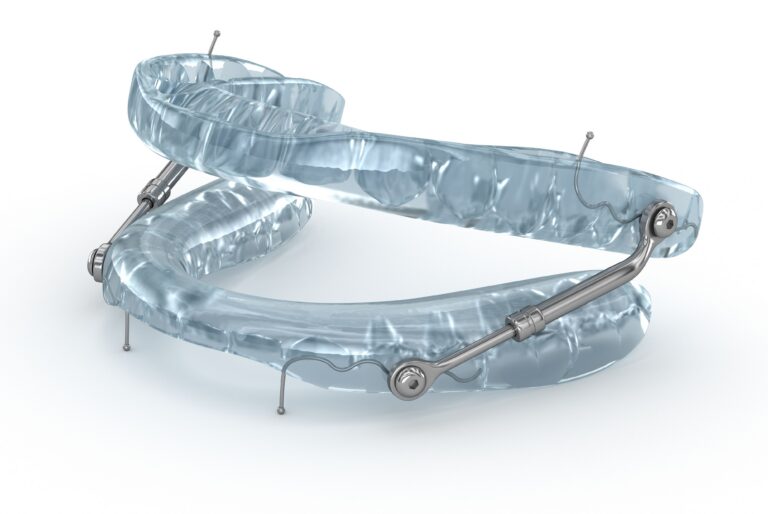
A custom oral appliance is designed to hold the lower jaw forward during sleep. For appropriately selected patients, that can help reduce airway obstruction.
Many patients notice improvements: less snoring, fewer awakenings, or more energy during the day. Those changes matter. They tell us something about your experience and can guide adjustments.
But sleep apnea can still be present even when snoring decreases or you feel better. That is why symptoms alone cannot confirm how well the treatment is working. Professional guidelines recommend follow-up sleep testing for patients using oral appliance therapy for obstructive sleep apnea. [1, 2] aadsm.org
I like to think of it this way: feeling better is an important part of the story; testing helps us see the part you cannot feel.
What does follow-up sleep testing involve?
Once you have adjusted to wearing the appliance and your dentist has worked with you toward a comfortable treatment position, your sleep clinician can determine the appropriate next step for testing.
Depending on your health and circumstances, that may be:
- A home sleep apnea test, which uses equipment you wear at home to measure breathing and other signals during sleep.
- An in-laboratory sleep study, which records a broader range of signals and may be more appropriate for some patients.
For the test to evaluate the appliance, you generally wear it during the study as directed by your sleep team.
Your sleep clinician interprets the results and discusses what they mean for you. There is no single testing schedule that fits everyone, and some people may need additional testing after adjustments. [2] PMC
What about a smartwatch or oxygen monitor?
A smartwatch, snoring app, or overnight oxygen monitor may provide observations worth sharing with your clinician. But these tools do not replace an appropriate follow-up sleep study.
For example, a device that measures oxygen levels alone does not show the full pattern of breathing events or establish whether your sleep apnea is adequately treated. The American Academy of Sleep Medicine recommends an appropriate home sleep apnea test or sleep-laboratory study when follow-up testing is indicated. [2] pmc.ncbi.nlm.nih.gov
What should you ask about your results?
It is reasonable to ask for more than “the test looked better.”
Here are a few questions that can make the follow-up conversation more useful:
- How did my results compare with my original sleep study?
- Are breathing events still occurring, and do they need further attention?
- What did the study show about my oxygen levels?
- Does the result meet the treatment goals we discussed?
- If the improvement is incomplete, what are my options?
- When should I follow up again?
Your clinician may discuss the apnea-hypopnea index, or AHI—a measure of breathing interruptions or reductions per hour during a sleep study. It is one useful part of the report, but the interpretation also depends on the type of test, oxygen findings, symptoms, other health conditions, and your individual treatment goals.
A lower number can be encouraging. Whether it is enough is a conversation to have with your sleep clinician.
What if the appliance is helping, but not enough?
That does not necessarily mean the treatment has failed.
Your sleep clinician and dentist may review how consistently you wear the appliance, how it fits, whether further adjustment is appropriate, and what the sleep test showed. Depending on your situation, they may discuss another treatment or a combination of approaches.
Options can include another discussion about CPAP, positional treatment for selected patients, weight management when appropriate, or other medical evaluation. The right choice depends on your diagnosis, preferences, health history, and response to treatment.
Do not make major changes to your prescribed treatment on your own. Talk with your sleep team so you understand the benefits and tradeoffs.
If CPAP has been difficult for you, you may also find this helpful: Struggling With CPAP? Discuss Your Treatment Options.
Your dentist’s follow-up matters, too
A sleep test helps your medical team assess your breathing. Dental follow-up looks at another part of the picture: how your teeth, bite, jaw, and appliance are doing.
During follow-up, your dentist may check:
- The fit and condition of the appliance.
- How comfortably and consistently you are wearing it.
- Your teeth, gums, existing dental work, and bite.
- Jaw movement, muscle discomfort, or joint symptoms.
- Whether adjustments or repairs are needed.
Some patients notice temporary tooth or jaw soreness, dry mouth, or extra saliva when they begin treatment. Changes in how the teeth meet can also develop over time and may persist. [3, 4] aadsm.org
Let your dentist know if you develop persistent or worsening pain, a bite that feels different during the day, a loose tooth, or an appliance that no longer fits correctly. Do not keep advancing or modifying it yourself without guidance.
A comfortable appliance is easier to use, but comfort alone does not establish that sleep apnea is controlled. That is why dental care and medical follow-up work together.
What can change after a successful test?
A good result is an important milestone, but your health is not frozen on the day of the study.
Contact your sleep clinician or dentist if:
- Snoring, gasping, daytime sleepiness, or other symptoms return.
- Your weight changes substantially.
- You receive a new diagnosis or have a significant change in cardiovascular or other health conditions.
- The appliance breaks, no longer fits, or has to be replaced.
- You develop persistent jaw discomfort or notice a change in your bite.
Your clinicians can decide whether you need an examination, appliance adjustment, or another sleep test. A replacement appliance may also need assessment even if it resembles the previous one. [1–3] aadsm.org
This does not mean everyone needs a new sleep study every year. The appropriate timing depends on the patient, the treatment, any changes in symptoms or health, and the sleep clinician’s judgment.
How often should you see your dentist and sleep clinician?
Oral appliance care includes periodic follow-up with both the dentist and the sleep clinician. The schedule may vary based on your treatment, appliance, oral health, and medical needs.
Your dentist can monitor the appliance and oral health. Your sleep clinician can assess the sleep apnea and determine when testing or a change in medical care is appropriate.
If you are unsure when you were last seen—or whether your appliance was ever checked with a follow-up sleep test—ask. It is a good place to start.
The question behind the appliance
A device can fit well and reduce snoring without fully answering the question that matters most: Is my sleep apnea being treated adequately?
That answer comes from looking at the whole picture: how you feel, what the sleep test shows, how consistently you use the treatment, and how your teeth and jaw respond over time.
At Highlands Dentistry, we evaluate oral appliance needs and coordinate care with sleep clinicians. If you already use an appliance, bring it to your visit along with your sleep-study information, if available.
Learn about Sleep & Airway care or request a sleep-related evaluation.
This article is educational and is intended for adults. Your sleep clinician and dentist can help determine the right follow-up for your individual circumstances.
References
- Ramar K, Dort LC, Katz SG, et al. Clinical Practice Guideline for the Treatment of Obstructive Sleep Apnea and Snoring with Oral Appliance Therapy: An Update for 2015. Journal of Dental Sleep Medicine. 2015;2(3):71–125.
- Caples SM, Anderson WM, Calero K, Howell M, Hashmi SD. Use of polysomnography and home sleep apnea tests for the longitudinal management of obstructive sleep apnea in adults. Journal of Clinical Sleep Medicine. 2021;17(6):1287–1293.
- Levine M, Cantwell M, Postol K, Schwartz D. Dental Sleep Medicine Standards for Screening, Treatment, and Management of Sleep-Related Breathing Disorders in Adults Using Oral Appliance Therapy: An Update. Journal of Dental Sleep Medicine. 2025;12(2).
- Sheats RD, Schell TG, Blanton AO, et al. Management of Side Effects of Oral Appliance Therapy for Sleep-Disordered Breathing. Journal of Dental Sleep Medicine. 2017;4(4):111–125.